- October 11, 2026
- by
- Digital Marketing
- 0 Comments
You’ve decided to take your business’s marketing seriously. Good. Now you open Google to find the “right tools” and within ten minutes you have thirty browser tabs open, each promising to be the one platform that changes everything.
It’s overwhelming. And most small business owners end up either paying for tools they never fully use, or avoiding tools altogether and doing everything manually — which eats up hours you don’t have.
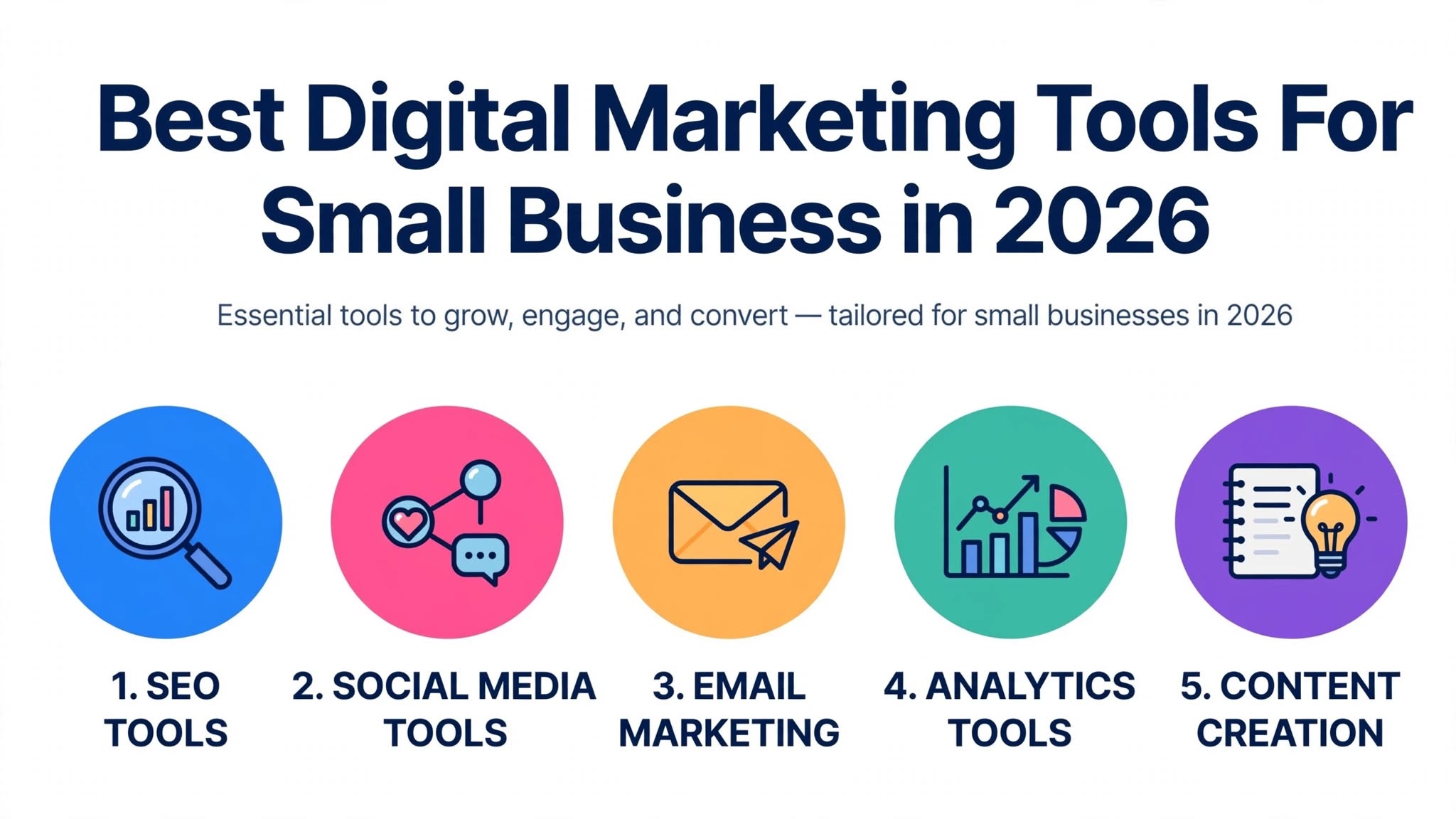
Here’s the truth: you don’t need thirty tools. You need the right handful, chosen for exactly what your business is trying to do. Below is a practical breakdown by category, built for small businesses that want results without drowning in software subscriptions.
1. Website & SEO Tools
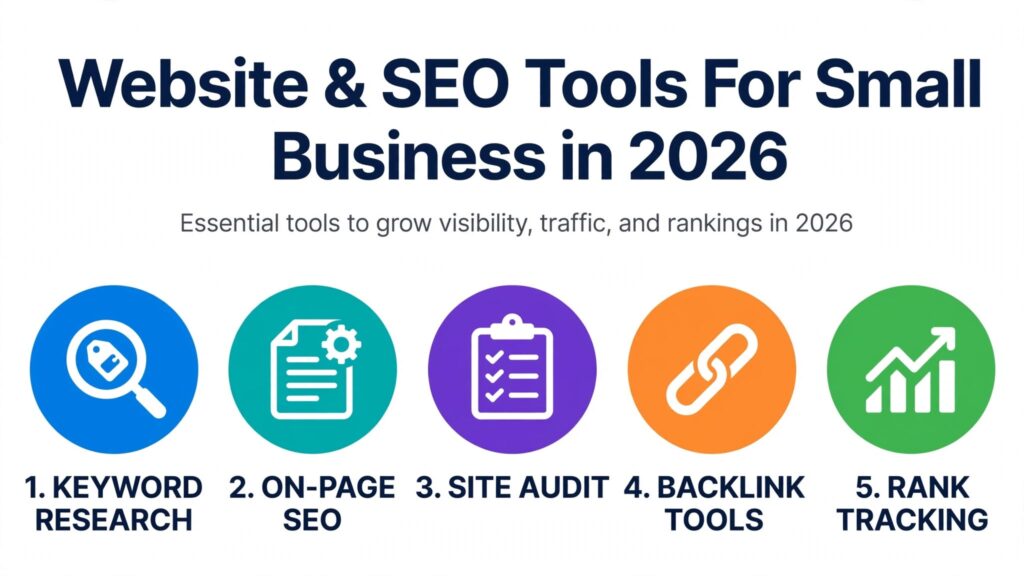
Your website is the foundation everything else points back to. These tools help you build it right and get found on Google.
– Google Search Console — free, and non-negotiable. It shows you exactly how your site performs in Google search, which keywords bring traffic, and any technical issues hurting your rankings.
– Google Analytics (GA4) — tracks who’s visiting your site, where they came from, and what they do once they land there.
– Ubersuggest / Google Keyword Planner — for finding what your potential customers are actually typing into Google before you write a single blog post.
– Yoast SEO / RankMath — if your site runs on WordPress, these plugins guide on-page SEO in real time as you write content.
2. Social Media Management Tools
Posting consistently across Instagram, Facebook, and LinkedIn manually is one of the fastest ways to burn out. Scheduling tools fix that.
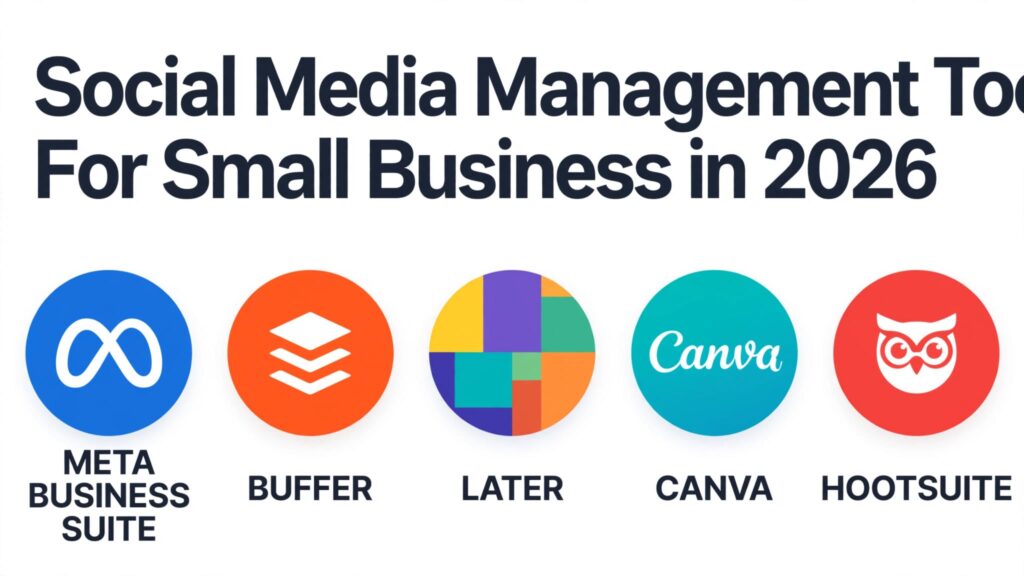
Meta Business Suite — free, and essential if you’re running Instagram and Facebook for business. Schedule posts, reply to messages, and check basic insights in one place.
Buffer / Later — good for planning content visually in advance, especially useful for Instagram grids..
Canva — not strictly a “management” tool, but no small business marketing stack is complete without it. It makes professional-looking creatives possible without a design team.
3. Email Marketing Tools
Once you understand [what email marketing actually is](https://novusengage.com/what-is-email-marketing/) and why it matters, the next step is picking software to run it.
Mailchimp — a strong starting point for small lists, with an easy drag-and-drop editor and free tier.
Brevo (formerly Sendinblue) — budget-friendly, with good automation features for welcome sequences and abandoned cart emails.
Zoho Campaigns — a solid choice if you’re already using other Zoho tools for your business operations.
4. Advertising Tools
Organic reach only takes you so far. When you’re ready to put money behind campaigns, these platforms are where it happens.
Meta Ads Manager — for running Instagram and Facebook ad campaigns, with detailed audience targeting by location, interest, and behaviour.
Google Ads — puts your business in front of people actively searching for what you sell, which usually means higher intent than social media ads.
Google Ads Keyword Planner — useful before you spend a single rupee, to understand what terms are worth bidding on.
5. Analytics & Reporting Tools
You can’t improve what you don’t measure. These tools turn scattered numbers into decisions.
Google Analytics 4 — again, the backbone for understanding website behaviour.
Google Looker Studio (formerly Data Studio) — free, and lets you pull data from multiple sources into one clean, visual dashboard instead of checking five different platforms every week.
Meta Ads Manager reporting — built-in reporting for anyone running paid social campaigns.
6. Productivity & Content Tools
Trello / Notion — for planning content calendars and keeping campaigns organised, especially useful once more than one person is involved in marketing.
ChatGPT / Claude — increasingly used for first drafts of captions, blog outlines, and ad copy, which you then refine with your brand voice.
How to Choose the Right Tools for Your Business?
Don’t chase every tool on this list at once. A practical approach:
1. Start with free tools first — Google Search Console, Google Analytics, and Meta Business Suite cover most of the basics at zero cost.
2. Add one paid tool only when a free tool clearly can’t keep up — for example, moving from manual social posting to a scheduler once you’re posting daily.
3. Pick tools that integrate with each other, so your data doesn’t end up scattered across platforms that don’t talk to one another.
4. Review your stack every few months. As your business grows, the tools that got you started may no longer be the right fit.
Final Thoughts
The right tools don’t replace strategy — they just make executing that strategy faster and less painful. Most small businesses don’t fail at digital marketing because they picked the wrong tool. They fail because they never had a clear plan for what to measure and why.
If figuring out which tools actually matter for your business feels like one more thing on an already full plate, that’s where a dedicated digital marketing team earns its keep.
Want a marketing stack built around your business, not a generic checklist?
[Get in touch with Novus Engage](https://novusengage.com/contact/) for a free growth audit.